South Africa and its Foreigners
There are parts of South Africa where I have never felt at ease.
I know them well, or rather, I know them by the feeling they bring about in me. A particular alertness. A sense of being watched, assessed, found wanting. These are spaces where control is performed such that the message communicated to someone like me, born in this country, raised in it, shaped by it, is that I do not quite belong here. I have learned, over years, to move through these places quickly, or to avoid them altogether.
These spaces have much in common. They are occupied, in significant measure, by foreigners. People whose origins are, if you press them, difficult to fully account for. Who arrived, over generations, and took hold. Who built walls, quite literally, high and usually painted white, with security cameras. And they called what was behind them theirs. Who move through the rest of the country as though it exists to serve them, and who have constructed entire neighbourhoods, entire economies, entire social worlds that most South Africans can observe but not enter.
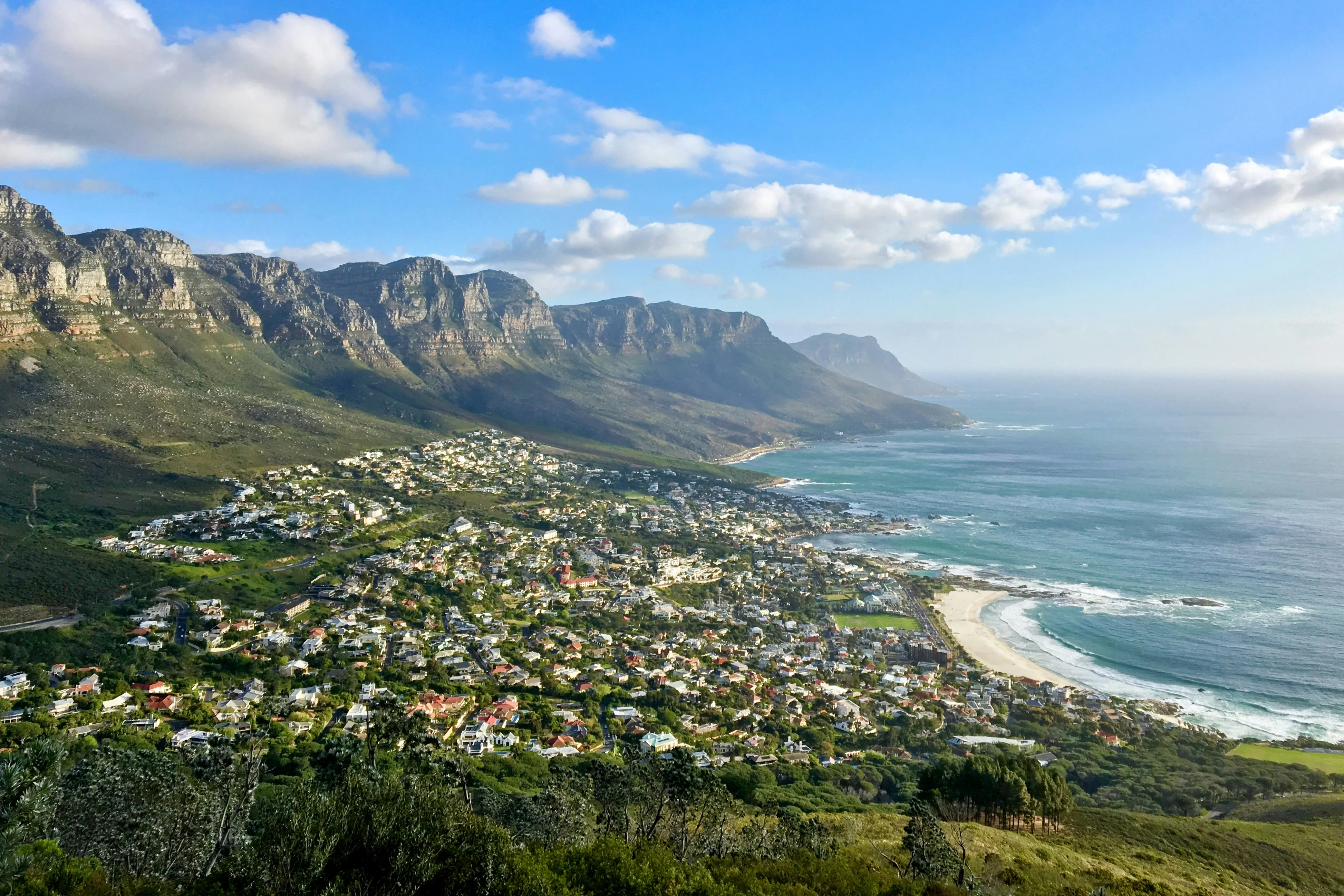
These are the Camps Bays, the Constantias, the Umhlangas, the Sandtons of South Africa. The places where the property prices announce, more clearly than any sign, who this land is for. Not a single one of these places has been touched by the recent wave of xenophobic attacks.
Some might call this a racial grudge. It is not. Some might say I am recycling apartheid. I am not. Apartheid can never be recycled. That battle was fought and won. What I am arguing here is what happened when the laws changed and the architecture remained.
The African Union commissioned a rigorous, continent-wide investigation into illicit financial flows. It captured the systematic movement of money out of African economies through mechanisms designed to be invisible. The findings, presented to the AU Summit and adopted by African heads of state, showed that Africa loses a minimum of fifty billion dollars every year.
By 2018, researchers tracking the same flows put the figure at one hundred billion. The dominant mechanism, which accounted for sixty-five percent of these losses, is not crime in the conventional sense. It is commerce. It is multinational corporations, headquartered primarily in Europe and North America, using instruments called transfer pricing and trade misinvoicing to shift profits out of African countries before they can be taxed.
This clearly does not require a street corner spaza shop, but a law firm, and a subsidiary registered in a secrecy jurisdiction. Above all, it requires protection. The protection of legal structures, bilateral investment treaties, and governments that have learned to look the other way.
For South Africa specifically, illicit outflows cost the equivalent of nearly five percent of annual tax revenue, approximately ZAR 92.5 billion, every year. In the mining sector alone, a United Nations study estimated that undeclared gold exports from South Africa between 2000 and 2014 amounted to seventy-eight billion dollars. Seventy-eight billion dollars in gold that left our country and did not come back, did not build a school, did not repair a road, did not stock a clinic. The European Commission has acknowledged that mining and extractive companies operating in Africa are responsible for sixty-five percent of its tax fraud.
The people responsible for this do not live in Diepsloot. They attend industry conferences. They sit on boards. They are, in the full sense of the word, welcome.
And those who are not welcome? A person selling oranges at an intersection. A woman braiding hair in a township salon. A tailor working from a single room. A domestic worker sending money home every month to children she has not seen in two years. A man asleep in his truck cab outside the port of Durban, who was petrol-bombed because someone decided he should not be there.
These are the people the mobs find. And when the mobs go looking, they do not ask for papers. They are not conducting an immigration audit. They are going door to door through buildings and informal settlements. They are listening for an accent. They are looking at a face. They are using a word.
The word is makwerekwere. It is a slur used in South Africa to mark black Africans, perceived to be foreign, as Other. The word itself performs its violence linguistically because it mimics, in mocking syllables, the sound of a language that the speaker does not understand. The implication is not merely that the person is foreign. The implication is that their speech is not language at all and that they do not quite count as human. Makwerekwere places people outside the boundary of the human in the same gesture that it places them outside the boundary of the nation.
In April and May of 2026, a citizen-led movement called March and March organised demonstrations against undocumented migrants in Pretoria, Johannesburg, and Durban. The protests turned violent and fatal. Two people were killed in April alone. Over the two years prior, 116 people lost their lives in xenophobic violence. In 2008 more than sixty people were killed, over a thousand were injured, and about a hundred thousand were displaced.
An organisation called Xenowatch, run out of the University of the Witwatersrand, recorded 406 verified xenophobic attacks between 2022 and 2025, with 151 in 2025 alone. A Cameroonian shopkeeper who had lived in South Africa for twenty years was attacked with golf clubs, whips, and pepper spray. A man in Diepsloot was driven from the place where he had sought shelter, beaten, and set on fire.
Lets be clear about what is happening here. Nobody going door to door in Constantia is listening for an accent. The people being hunted by mobs are not the residents of Camps Bay. The people whose shops are being destroyed, whose doors are being broken down in the night, who are being told to leave or face the consequences, are people from elsewhere on this continent. People who, in many cases, fled conditions that would have broken most of us. People who came here and rebuilt their lives with what they had. And they are being destroyed for it.
So why is this happening? I am not talking about why the mobs doing this believe it is warranted. The story about jobs and resources and borders, has been told enough. There is a current at work here that runs far deeper than jobs or borders. It is so old, so foundational, that we have long since lost sight of what it is.
The Martinican philosopher Frantz Fanon, writing in the aftermath of colonialism, warned that within the post-colonial moment lay a particular danger. Having inherited the colonial state without dismantling its architecture, the new order would find ways to reproduce the its violence, not against its original architects, but against those nearest and most unprotected. The rage that cannot travel upward, toward structural power, travels sideways. It finds someone who resembles the self enough to be threatening and different enough to be blamed. It finds someone who is not in a position to fight back.
Apartheid was very much a project of fragmentation. Its homelands system was designed not only to contain black South Africans spatially but to prevent the consolidation of a unified black political consciousness. Bapedi against BaSotho against BaTswana against amaZulu against amaXhosa, administered separately, turned inward.
The system is formally gone. But the habit of fragmentation persists, now extended to a continental scale. The Zimbabwean, the Congolese, the Mozambican becomes the new internal Other. The boundary that gets drawn is within blackness itself, which is precisely what makes it so devastatingly useful to those who benefit from black disunity.
And yet this is what goes unnamed. Three independent UN Special Rapporteurs on racism, on extrajudicial killings, and on the human rights of migrants have put it plainly: xenophobia in South Africa is often explicitly racialised, targeting low-income black migrants and refugees, and in some cases South African citizens accused of being "too black to be South African."
I have been sitting with this heaviness for a while now and, like many other South Africans, grappling with what we make of it. As a writer, I can at least turn to imagination.
So, how about if we imagine a different march. Not through Diepsloot, not through KwaMashu, not through the spaces where the most marginalised people in our country are already living under surveillance. Imagine Zimbabweans, Mozambicans, Congolese, Nigerians, Malawians, and South Africans alongside them, because this is a battle we take up together. Imagine marching through Houghton. Through Camps Bay. Through Sandton. Not with torches or weapons. With names. With figures. With the data about which companies have shifted how many billions out of our country and into which jurisdictions.
Imagine making visible what has been made deliberately invisible. Naming the multinationals. Naming the mechanisms. Standing outside the offices of the extractive industries and asking, loudly, where the ZAR 92.5 billion went. Asking about the seventy-eight billion dollars in gold. Asking who authorised the transfer pricing arrangements that have cost our country more than it has ever received in development aid.
Because here is the uncomfortable truth that the xenophobic violence is designed, albeit consciously or not, to obscure: if South Africa recovered even a fraction of what is being taken from it through illicit financial flows, it would not need to fight over the scraps. The unemployment that is being blamed on a person selling oranges at a traffic light is not caused by that person. It is caused by decades of structural extraction, by a skills system deliberately impoverished under apartheid, by an economy that was built to serve interests that were never South African, or African for that matter.
Pan-Africanism was never meant to be a sentiment. It was always a political analysis, and one that understands that the liberation of any African people is bound up with the liberation of all African people, and that the divide-and-rule architecture of colonialism depended on preventing exactly this recognition. Oppressed South Africans survived apartheid not because we are uniquely resilient. It survived because Zimbabweans, Tanzanians, Zambians, and Mozambicans opened their borders, housed our leaders, and absorbed the risk.
A South Africa that burns that solidarity in the streets, that calls its benefactors makwerekwere, that hunts them in the night, is not a South Africa on the way to freedom. It is a South Africa that has made itself safe for exactly the forces that have always been its true enemy. And it has made itself dangerous only for those who stood with us in our time of greatest need.
Sources
The financial data cited in this piece draws primarily from the African Union / United Nations Economic Commission for Africa High Level Panel on Illicit Financial Flows from Africa (2015), available at au.int. Supporting data on illicit flows is drawn from UNCTAD's 2022 report on illicit financial flows from Africa.
Figures on xenophobic incidents are drawn from Xenowatch, a monitoring platform run by the African Centre for Migration and Society at the University of the Witwatersrand (xenowatch.ac.za), and from Human Rights Watch's May 2026 report South Africa: New Waves of Xenophobic Attacks.
The characterisation of xenophobia as explicitly racialised draws on a joint statement by three UN Special Rapporteurs on racism, on extrajudicial killings, and on the human rights of migrants, issued by the Office of the High Commissioner for Human Rights on 15 July 2022.
The theoretical framework draws on Frantz Fanon, The Wretched of the Earth (1961).
Photograph: Camps Bay, Cape Town. Photo by Tobias Fischer via Unsplash.